That tenth of a percent: why 99.5% lithium from wastewater changes everything for IonIQs
IonIQS
“Finally.” More said Jasper Zuidervaart not when he collaborates with his CTO Antony Cyril Arulrajan reached the magic limit of 99.5% pure lithium. For a long time, they hovered around 99.4%. The difference seems small, but in practice it's gigantic. Only at 99.5% do you have battery-grade lithium, pure enough for electric vehicles and batteries. Anything below that is considered a risk in the battery industry. That tenth of a percent took a year of experimentation, but now they know it's possible and not a fluke. "We've been able to achieve it in multiple process settings, so we've found multiple pathways to reproduce this quality."
It became increasingly clear that this was a huge opportunity. We had the opportunity to both make an ecological impact and be economically profitable.
From Philips to the coffee table
Jasper isn't the type you'd expect at a startup. With 61 international patent families to his name and decades of experience in new business development, he had it made. He was Innovation Lead at Philips and later responsible for global R&D teams at Wavin. He's built large engineering teams, constructed supply chains, and brought technology from lab to factory and market. Entrepreneurship was always in him. He'd run some experiments in the IoT era before, but the step to a startup? That only came in 2024.
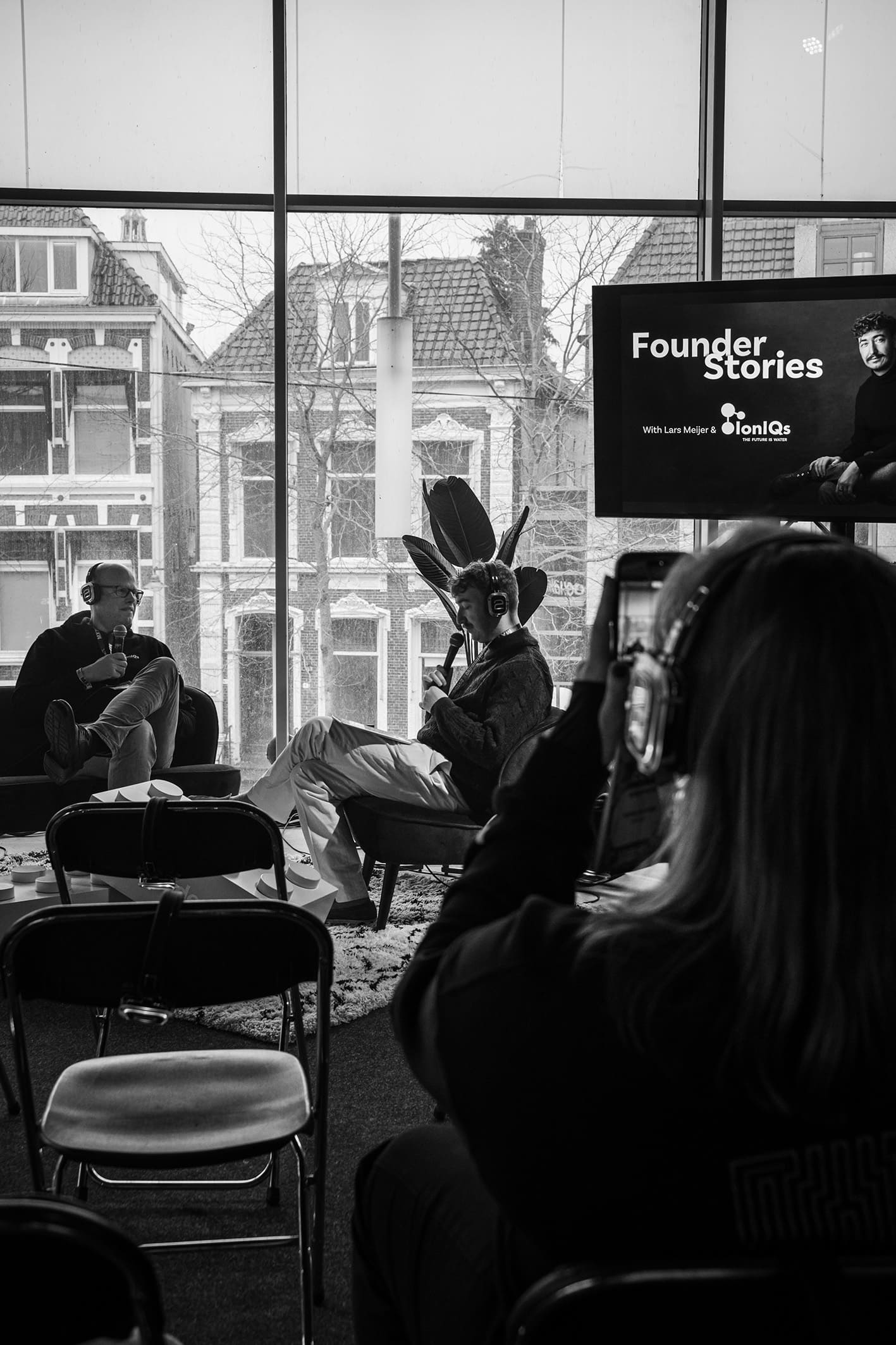
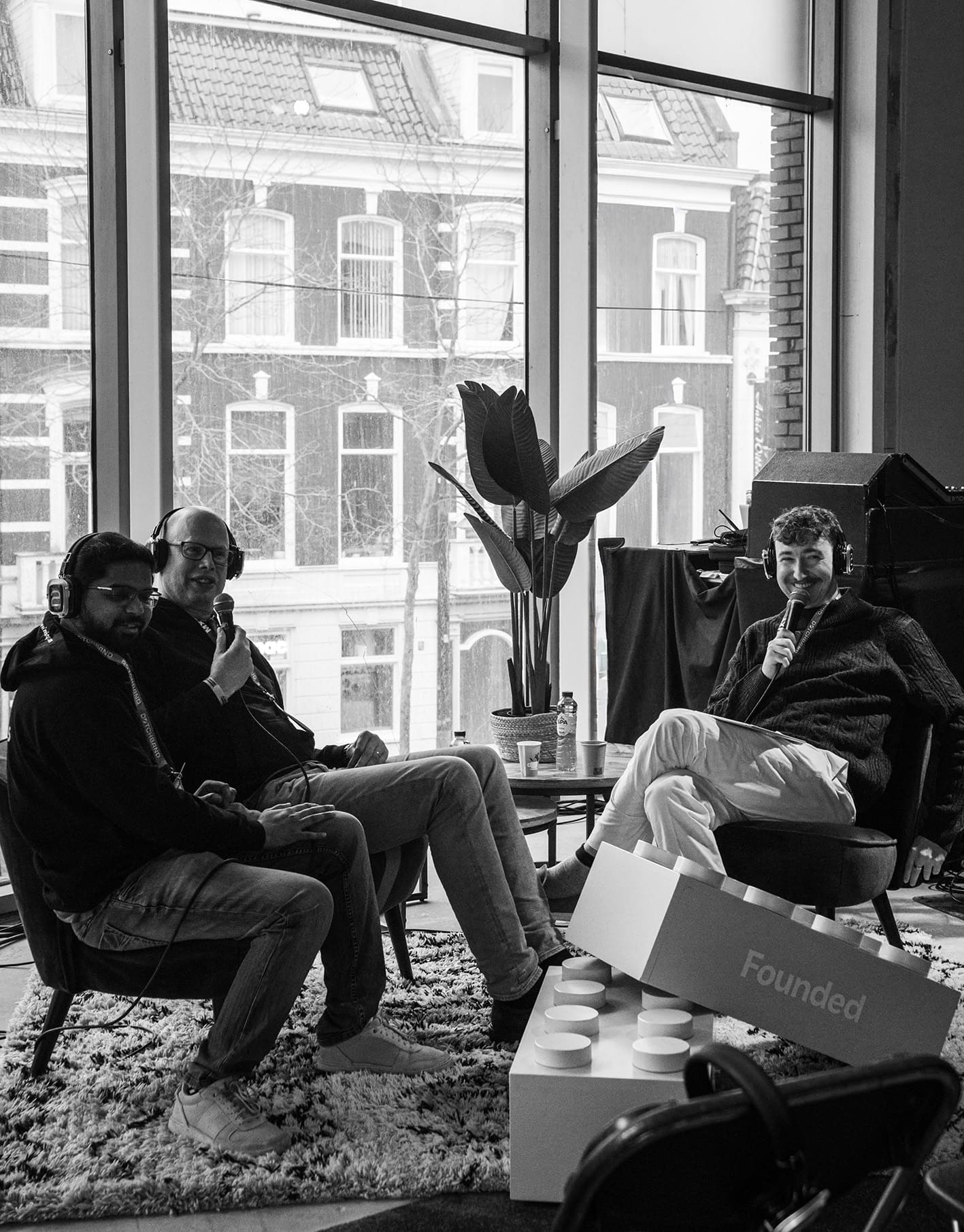
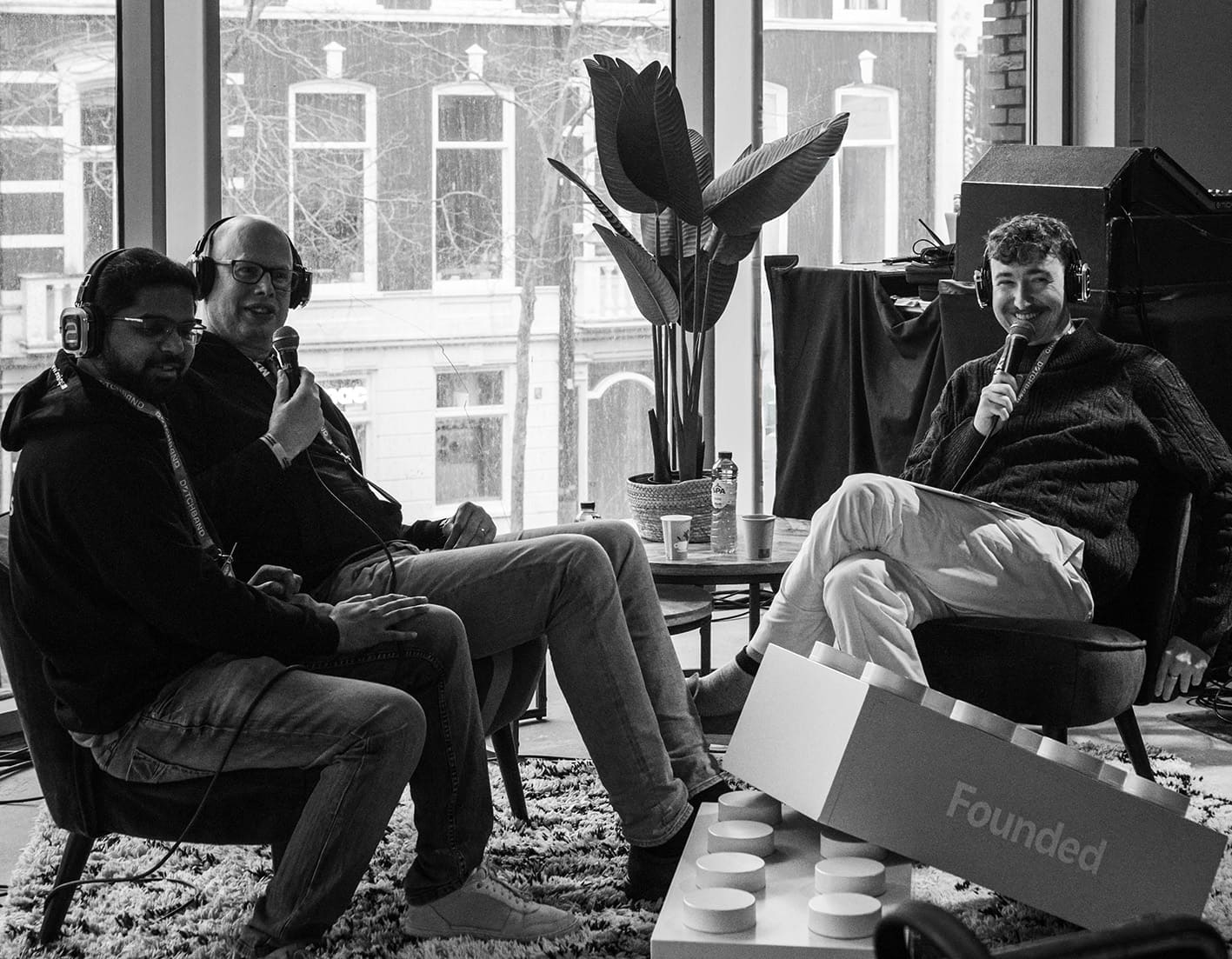
Through the Groningen startup ecosystem (Innokite & Founded), he connected with Antony, a scientist with two PhDs and a brilliant invention in hand. They met at the Forum in Groningen. Jasper had only come to listen and share his experience. "I like to help startups with my experience and network."
But during that conversation, something shifted. "It became increasingly clear that this was an enormous opportunity. We had the possibility to make both ecological impact and be economically profitable." Jasper had seen it too often: sustainability innovations where you have to choose between good for the environment or profitable. "That trade-off, I never get excited about that. I also never really see those succeed." With Antony's technology, it wasn't 'or', but 'and'. "I thought: we have to do this. It wasn't really a discussion."
An olympic swimming pool per car battery
The problem IonIQs tackles is enormous. To get lithium pure enough for batteries, refineries use an Olympic swimming pool's worth of water per car battery. In that wastewater, there's still valuable lithium that currently just washes away. Per refinery, we're talking about 1.5 kilotons of lithium per year, which amounts to €17.5 million worth of material literally going down the drain that IonIQs can recover for the refinery.
And lithium use is only growing. Currently, about 30 lithium projects are starting up or scaling up in Europe. "104 kilometres from here, just across the German border in Emden, there was a plan for such a refinery. With all the associated impact on environment and water. That was almost being built in our backyard." It didn't go through; the refinery is now being built in France. But it illustrates how close to home this hits.
You can stop. I've heard enough. This is exactly what the industry needs. I want in!
The magic of IoniQS
IonIQs uses electro membrane filtration. The wastewater flows through their system, impurities are filtered out of the lithium, and at the end of the process you also have clean water. Where traditional processes consume a lot of energy and still produce polluted water, IonIQs delivers clean lithium and reusable water.
The missing link
With such groundbreaking technology, you unfortunately don't just walk into a conservative industry. The solution was bringing someone on board who does have the access, network, and credibility. Jasper and Antony realized they were missing something crucial: internal knowledge of the lithium industry and access to the right players.
They found Christopher Iacò, someone who worked for years in the battery division at Tesla and LG. Now he owns an engineering company in Italy that works for existing and new lithium mines and refineries.
Jasper approached him for a conversation via Teams. "After I think eight minutes, he said: 'You can stop.'" Jasper and Antony looked at each other. Wasn't he interested? "He said: 'I've heard enough. This is exactly what the industry needs. I want in!'"
One hundred percent of nothing
Before Christmas 2025, they signed the agreement. Christopher Iacò became the third co-founder. As founders, it's tempting to keep all your shares to yourself. But Jasper and Antony faced a choice: "Do we want a hundred percent of nothing, or are we willing to give away part of our shares for the chance to double what it can become?"
That choice shows how Jasper thinks about entrepreneurship. Not holding on to what you have, but daring to invest in what it can become. "Now we have someone permanently on board who's committed to our company and our mission and who brings essential knowledge and network."
IonIQs is now in the pre-seed phase. The team is building a mobile pilot small enough to fit in a flight case. So Antony can literally fly to a refinery and experiment on-site. Conversations are ongoing with parties in Latin America and Europe.
The next funding moment is clear: as soon as they have a potential pilot customer with a letter of intent, the next batch of investment money is ready. So the next step is really to run that pilot at a refinery.
Start working in the real world as soon as possible. Only then do you start to learn the things you don't know when you first start.
Not just making money
In a few years, much more lithium will be extracted than now. Nobody changes that. "The enormous quantities of lithium needed for the energy transition, those will be mined and processed anyway." The difference is in the impact. "We do it with IonIQs technology in such a way that the environmental impact is significantly lower. We ensure the energy transition happens with a more sustainable footprint."
For those wanting to go from lab to market, Jasper has clear advice. "Start working in the real world as soon as possible. Only then do you start to learn the things you don't know when you first start." Get out of the lab, in other words. Or do the reverse: bring the outside world into your lab. "You can't start that process early enough."
Adapting and moving forward
IonIQs is the perfect example of that themselves. "In the beginning, we thought we could buy lithium ourselves, purify it, and sell it for more. Maybe even set up our refinery. That's not how this market works. There are multi-year direct contracts between mines, refineries, and battery producers. You can't just get in between those."
When they figured that out, they adjusted their approach. "We're going to deliver our technology as a service on-site to refineries, which gives them a more efficient and water-efficient process. We're going to recover battery-grade lithium and deliver it to the refineries. The future will tell."
Interview & text | Lars Meijer